Applications are now open for the
HPC Training Course on Professional Writing for International Organizations
International organizations require clear, concise, and logically structured writing for reports, policy memos, proposals, and briefing notes. In a time of increased competition for diminishing funding and stretched mindshare between and within international organizations, the importance of effective, results-driven writing is greater than ever, from initial job applications through to internal emails, reports and funding proposals. And while generative AI can be a useful tool, it is critical to understand its limitations – and to grasp the fundamentals of effective writing to guide prompts. This two-day intensive programme equips participants with practical writing skills aligned with international standards.
Objectives: Apply plain English principles and logical structures; produce standard documents (career summary, internal email, report); Master logic-based writing with the inverse pyramid approach; Eliminate verbosity and develop writing that is immediately clear to colleagues and decision makers from diverse backgrounds; and Learn effective formats for English resumes (e.g., P11/PHP), cover letters, emails and reports.
Format: interactive lectures combined with hands-on exercises for each concept and each real-world example.
Detailed agenda: Day 1 covers the core elements of effective written communication and the stylistic elements common to international organizations. Day 2 focuses on applied documents, including job applications, emails and reports, and a final capstone exercise.
- Training overview
- Participants are expected to be individuals aiming for professional careers who regularly draft formal documents in English (e.g. at international organizations like United Nations agencies)
- Duration: Two days (6 hours per day / 12 hours total).
- Format: Interactive lectures, individual/group/pair work (depending on participant numbers).
- Mode: In-person (and online)
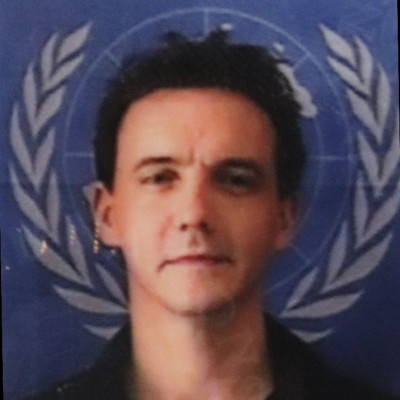
- Facilitator: Petroc Wilton (Head of Communications, World Food Programme [WFP] Chad)
Mr. Wilton is strategic communications specialist for international emergency and development operations. He has served as Head of Communications for the United Nations World Food Programme [WFP] in Chad [2025-2026]; Head of Communications for WFP Somalia [2020-2024]; and Communications Officer for WFP Uganda [2019-2020]. Before joining the UN he worked for more than a decade as a business journalist and editor in Australia, culminating in his appointment as Group Editorial Director for Decisive Publishing [2013-2018].
(Coordinator: Hideaki Shinoda, Director, HPC / Professor, Tokyo University of Foreign Studies)
Venue and Dates
Venue: National Olympic Memorial Youth Center (3-1 Yoyogi Kamizono-cho, Shibuya-ku, Tokyo)
- Dates
September 26 [Sat.] and 27 [Sun] 2026
- Participation Fees
30,000 JPY (in person) [20,000 JPY (online)]
Application
Send an email to the following address with your CV (any format)
hpcapplication@peacebuilders.jp
(there is no deadline, while there will be no more than 20 in-person participants)
Schedule (two-day programme)(Application Guideline Writing Course 20260915)
Day 1: Foundations and style (6 hours)
Build a solid foundation in the core principles of writing for international organizations.
|
Time |
Session |
Exercise |
|
10:00–10:20 (20 min) |
Intro: better writing to influence decision-makers · The three Cs: clarity, conciseness, context · Tone and style expected in international organizations · Structure outline for the course |
|
|
10:20-10:30 (10 min) |
Break |
|
|
10:30-11:40 (70 min) |
Session 1: Clarity · Lead with the lede: the inverse pyramid model · Structure: logical flow, topic sentences, transitions · Acronyms and the jargon trap |
Reconstruct a set of disordered sentences into one coherent and logically structured paragraph. |
|
11:40-11:50 |
Break (10 min) |
|
|
11:50-13:00 (70min) |
Session 2: Conciseness · The elevator pitch: paring down to key messages · Repetition and why it should be used sparingly |
Rewrite an overly verbose article on international politics or economics by reducing its length by approximately 30% while preserving its key messages.
|
|
13:00–14:00 |
Lunch Break (60 min) |
|
|
14:00–15:30 (90 min) |
Session 3: Context · Know your audience · What do you need from them? · What do they need from you? · Channels and conventions |
Audience/context-sensitive rewrites of information |
|
15:30–15:40 |
Break (10 min) |
|
|
15:40–17:00 (80 min) |
Session 4: Elements of style for international organizations · Neutral writing · Active vs passive voice · Evidence-based · Eliminating vagueness · Jargon and acronyms · Inclusive language · Style guides · Using AI to shape style |
Rewrite weak, bureaucratic, biased writing into concise, neutral, persuasive, and action-oriented English |
Day 2: Practical writing in context (6 hours)
Apply the skills learned on Day 1 to realistic writing tasks commonly required in international organizations.
|
Time |
Session |
Workshop |
|
10:00–11:30 (90 min) |
Session 5: Writing application documents for international careers · How to interpret job descriptions · Presenting achievements using the STAR approach |
Summarize your own professional experience as concisely as possible using the Action + Result format preferred by international organizations. |
|
11:30–11:40 |
Break (10 min) |
|
|
11:40–13:00 (80 min) |
Session 5: Effective workplace emails · Writing subject lines that busy managers will open · What’s your objective? · Structure and bullets |
Draft a brief, effective email to a more senior officer who is not your supervisor, with the objective of persuading him/her to take the action you want to help your team |
|
13:00–14:00 |
Lunch break (60 min) |
|
|
14:00–15:20 (80 min) |
Session 6: Proposal and report writing · Summarizing effectively · Stick to task/template! · Explaining data and statistics clearly in English · Maintaining objectivity and neutrality |
Interpret graphs and statistical data and write a report section in an appropriate style for international organizations. |
|
15:20–15:30 |
Break (10 min) |
|
|
15:30–17:00 (90 min) |
Session 8: Capstone case study and course wrap-up · Writing under realistic time pressure · Comprehensive instructor feedback · Resources and strategies for continued professional development |
Final challenge: In no more than three brief paragraphs, summarize a policy problem, propose a solution and outline what resources you need to achieve it. 40 minutes. |
Key features and strengths of the programme
- a) Focus on effective communication rather than elegant English
In international organizations, sophisticated vocabulary is far less important than clarity, brevity, precision, and readability. This course helps participants transform academic or literary English into professional English that supports decision-making and operational effectiveness.
- b) Strong emphasis on practical output
Participants spend a substantial portion of the programme rewriting, drafting, and editing real-world documents. The course is designed to ensure that participants actively apply what they learn rather than simply acquiring theoretical knowledge.
- c) International standards for inclusive and non-discriminatory language
The programme covers the principles of inclusive language expected in the United Nations and other international organizations, including gender-sensitive and culturally respectful writing. Participants will learn how to produce professional documents that meet contemporary international standards of neutrality, diversity, and inclusion.